







Why an in-floor safe is hard to beat
An in-floor safe is set into a concrete slab so that only a low-profile lid sits at floor level, and a rug, carpet or piece of furniture covers that. Once installed it has two advantages no free-standing safe can match. It cannot be carried away — the surrounding concrete is the anchor, and there is no exposed body to attack from the sides, back or top. And an intruder working through a house in a few minutes will not find it, because there is nothing to see.
The trade-off is that access is from above, so you retrieve items by reaching down rather than opening a door onto shelves. That suits cash, jewelry, bullion, documents and handguns; it suits bulky or frequently accessed items less well.
Materials and locks
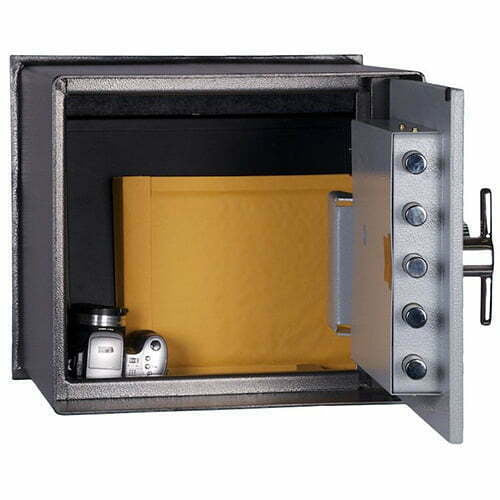
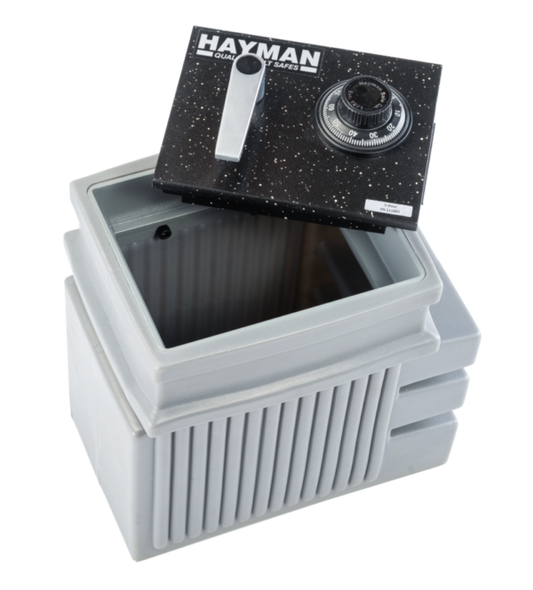
The two Hayman PolyVault models use a rustproof polyethylene body, which will not corrode where it sits against damp concrete. The four Hollon B-series safes (B1500, B2500, B3500 and B6000) are B-rated steel safes with a 1/2" solid steel door and a powder-coated finish that protects the steel from moisture in the concrete.
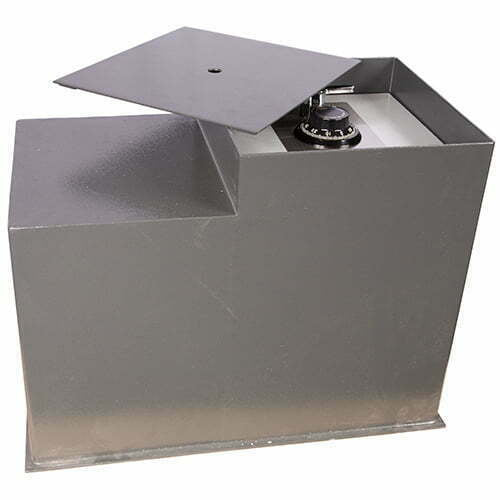
The S-1200B-C uses a UL-listed mechanical combination dial — no batteries, no wiring, nothing to fail with time. The PS-1000-E uses an electronic keypad for faster access, which is the better choice if the safe is opened often.
Installation realities
These safes are designed to be poured into a new slab or set into a core-drilled opening in an existing one. A garage, basement or utility-room slab is the usual location. Two points are worth planning for: the lid must sit flush or slightly below the finished floor so it can be covered convincingly, and the opening needs to be positioned where furniture or a floor covering will sit naturally — a safe in the middle of an open floor draws the eye to the one rug that never moves.
If you are installing into an existing slab, this is normally a job for a contractor with a core drill. In new construction, siting it before the pour is far simpler and cheaper.
Fire and water
In-floor safes are burglary-resistant by concealment and by construction; they are not fire rated. In practice a safe set in concrete below floor level sits in the coolest part of a burning building, which helps, but it is not a substitute for a tested rating. Records that must survive a fire belong in a fire and burglary safe. Consider also that a floor safe in a basement or garage can be exposed to standing water — store paper in sealed bags inside it.
Frequently Asked Questions
How do the Hollon B-series floor safes differ in size?
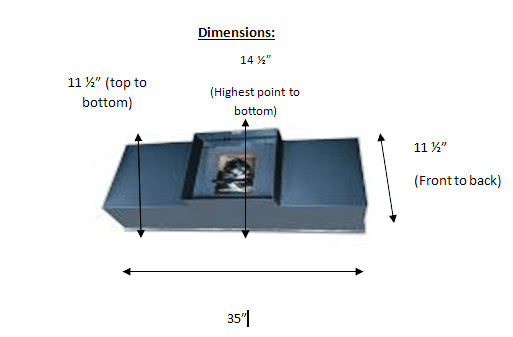
The B1500 measures 14 9/10" x 13 1/2" x 11 4/5" and weighs 79 lbs, and the B2500 is deeper at 17 1/2" and 93 lbs. The B3500 is 18" x 13 1/2" x 23 1/2" at 140 lbs, and the B6000 is a 35" long wide-body model at 135 lbs.
What lock and bolts do the Hollon floor safes use?
They use a UL Listed Group 2 mechanical dial behind a drill-resistant hardplate, with a full-length dead bar, an external relocker and a spring-loaded internal relocker. The B1500, B2500 and B3500 add five solid steel locking bolts, and an air-spring bar helps lift the door.
What are the dimensions of the PolyVault floor safes?
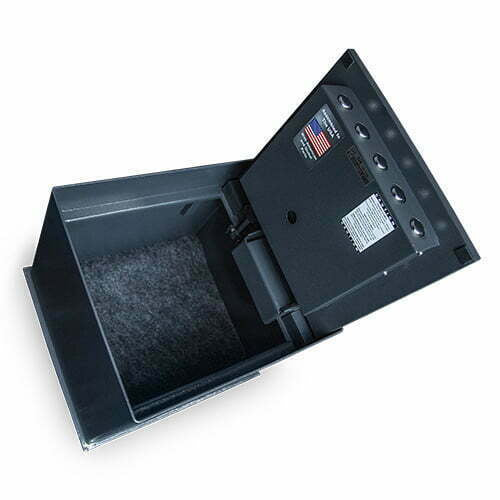
Both PolyVault models measure 15 1/4" x 14 1/8" x 14 1/8" outside and 13 3/4" x 12 1/2" x 12 1/2" inside, a capacity of 1.24 cu. ft., and weigh 78 lbs.
How do you get into a PolyVault once it is unlocked?
The door lifts out completely, giving full top-down access to the storage cavity.


