

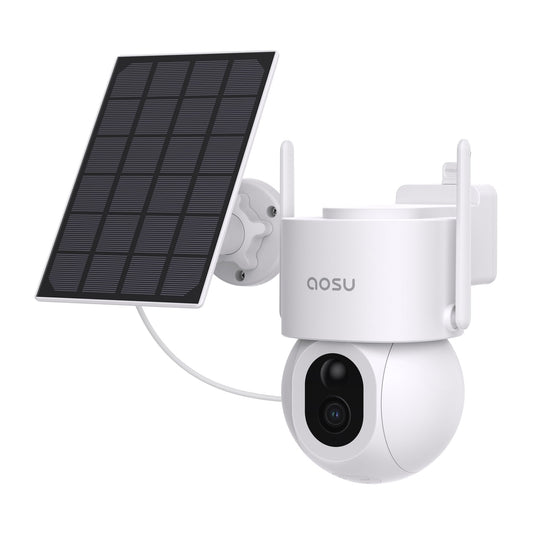

Choosing an AOSU camera setup
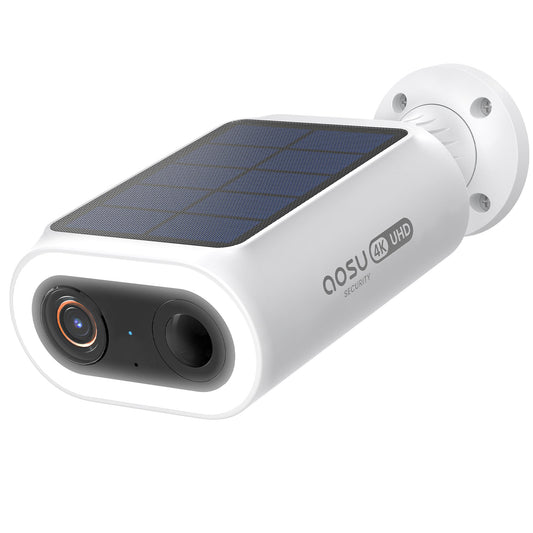
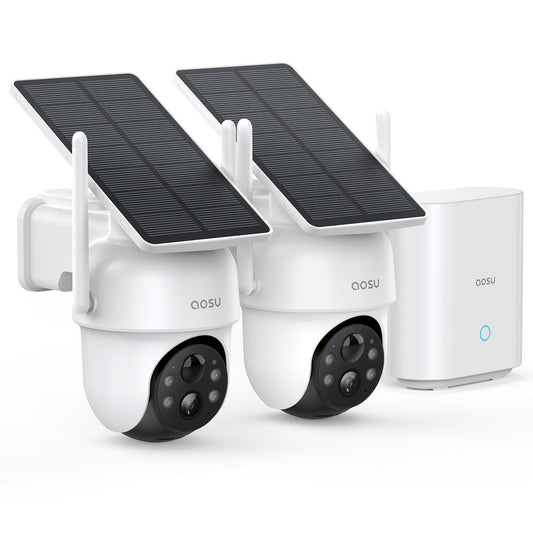
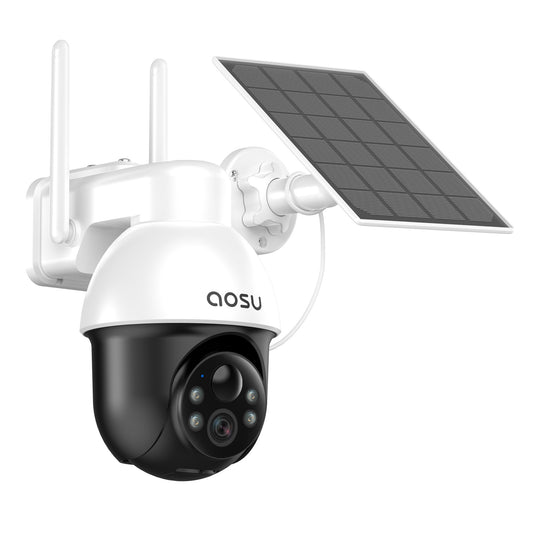
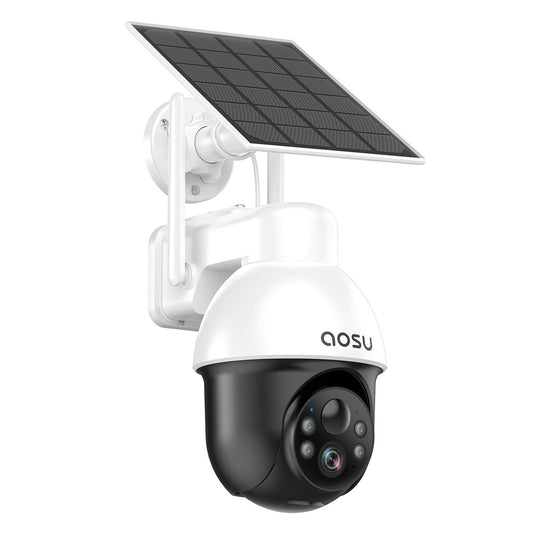
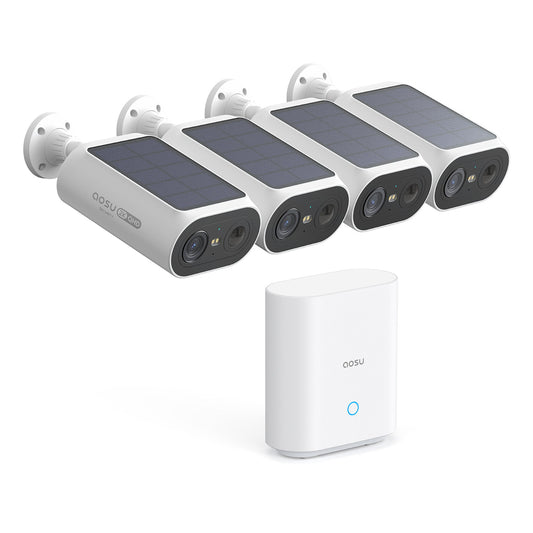
AOSU cameras are built around one idea: no wiring at all. An integrated solar panel keeps the battery topped up, so there is no cable to run, no outlet needed at the mounting point, and no recharging schedule — which is what makes them practical at a gate, a back fence or a detached garage.
How many cameras?
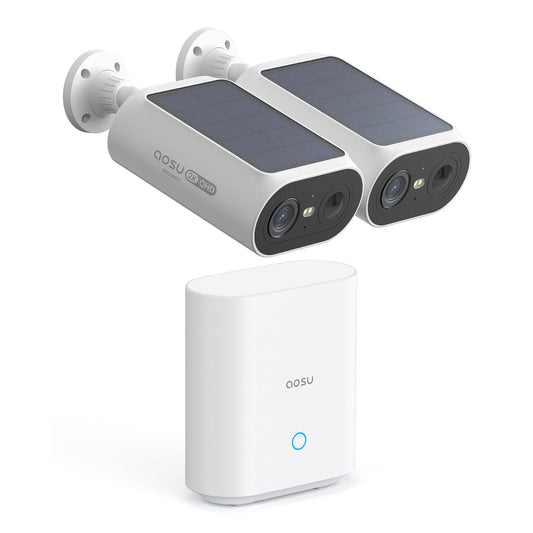
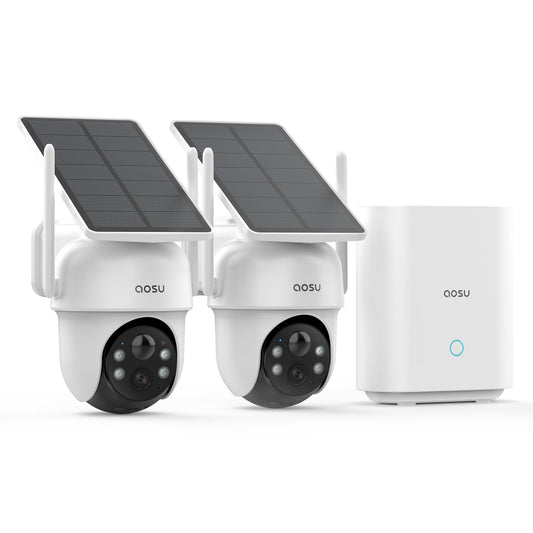
Count the approaches, not the walls. Most properties need coverage of the driveway, the front entry, and whichever side or rear approach is least overlooked — typically three points. Single cameras suit a specific problem spot; 2-packs and 4-packs cover a whole property and usually work out better per camera. It is worth planning the full layout up front even if you buy in stages, so the system you end up with is coherent.
Fixed view or pan-tilt?
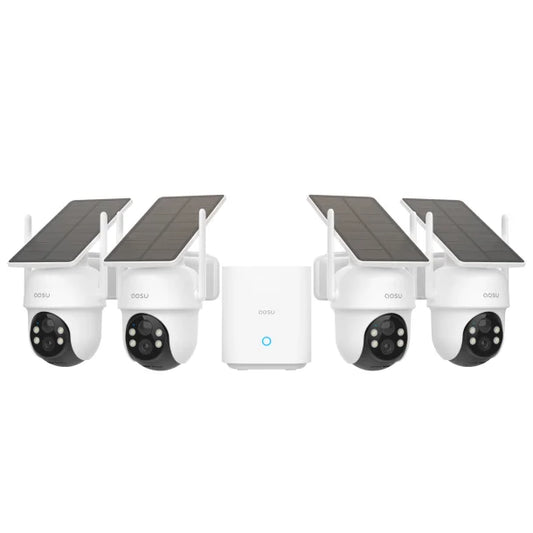
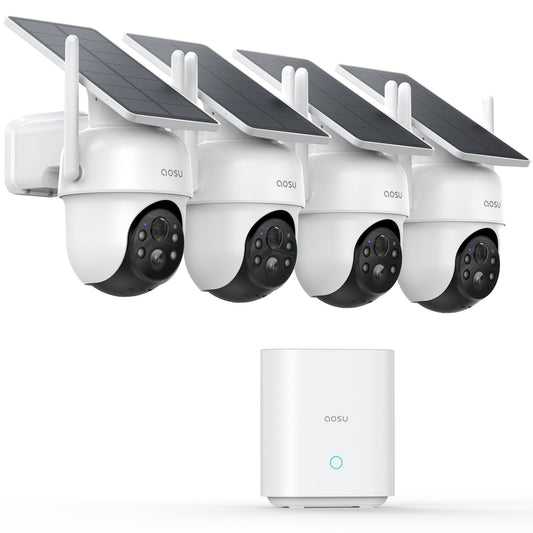
A fixed camera watches one framed scene reliably and is the right answer for a doorway or a gate. A pan-tilt-zoom camera covers a much wider area from one mounting point and can follow movement across it — better for an open driveway or yard, where a fixed lens would either miss the edges or be too wide to show detail.
Ask where the footage lives
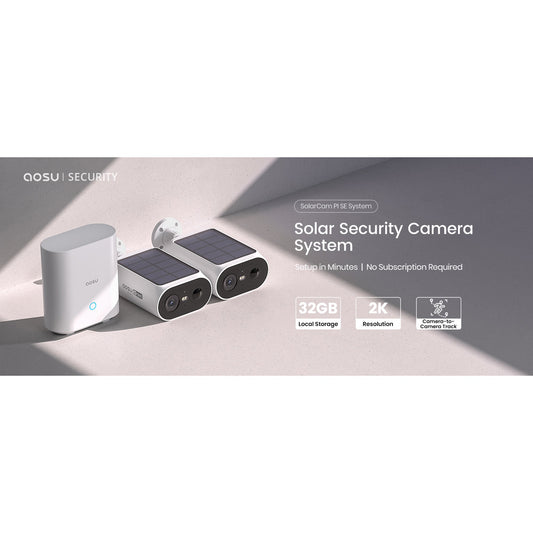
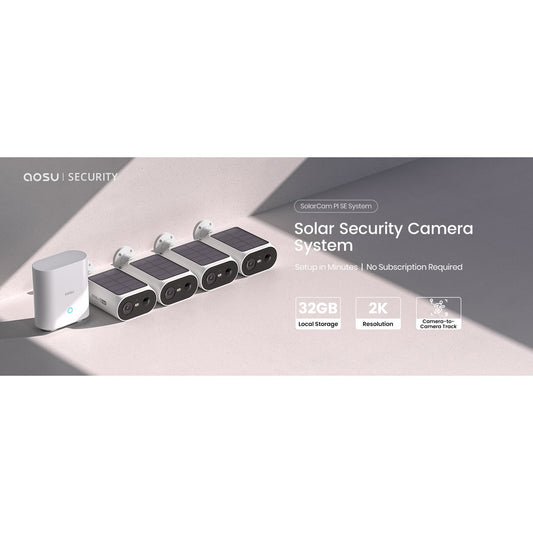
This is the recurring cost question. Local storage — a card in the camera or a base station — means no monthly fee. Cloud storage usually means a subscription, sometimes after a free tier. Check which model a camera uses before buying, because it is the difference between a one-time purchase and an ongoing one.
Two placement checks that catch people out
Sun on the panel. The camera charges only if its panel gets several hours of direct sun, and the winter sun is much lower — check the spot in the season that matters, not just today.
Wi-Fi at the mount. The far end of a driveway is often outside usable Wi-Fi range even when a phone shows a bar or two. Walk to the intended position and check the signal there before mounting, and plan for an extender if it is marginal.
Smart home
AOSU cameras work with Alexa and Google Assistant, so a feed can be pulled up on a smart display by voice. Check each product page for the exact resolution, field of view, storage options and pack size.
Frequently Asked Questions
What video resolution does each AOSU camera record?
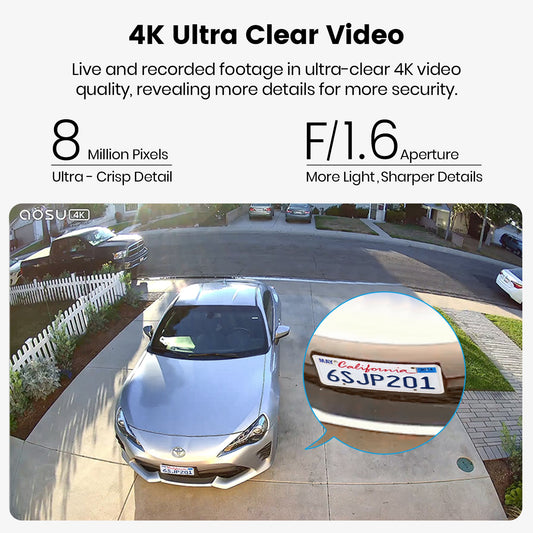
The SolarCam P1 Max records in 4K (3840 x 2160) and the C9S2CH11 in 3K (3072 x 1920). The other models record in 2K (2560 x 1440).
Which AOSU cameras use 5 GHz Wi-Fi?
The HomeBase systems (C9C3CA11, C9C-4H, C8E2DA11 and C8E-4H) support dual-band 2.4 GHz and 5 GHz Wi-Fi. The C9L2BA11, P1 Max and 3K camera connect on 2.4 GHz.
How bright is the spotlight on the 3K camera?
The C9S2CH11 has a built-in 400-lumen spotlight that reaches up to 33 ft for color night vision. It operates from -4°F to 122°F and weighs 2.2 lbs.
Are AOSU cameras weatherproof?
Every AOSU camera here is rated IP65 for outdoor use.


