


















Choosing the right cash drop safe
A depository safe solves one specific problem: letting staff put money in without being able to take money out. Every model here separates the deposit path from the door, so a cashier can drop a till or an envelope at any time while only a manager or armored carrier can open the safe. The choice between them comes down to how the deposit is made and how much accumulates before it is collected.
The deposit styles
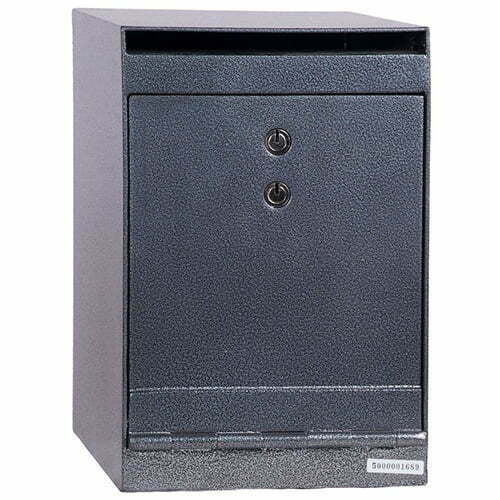
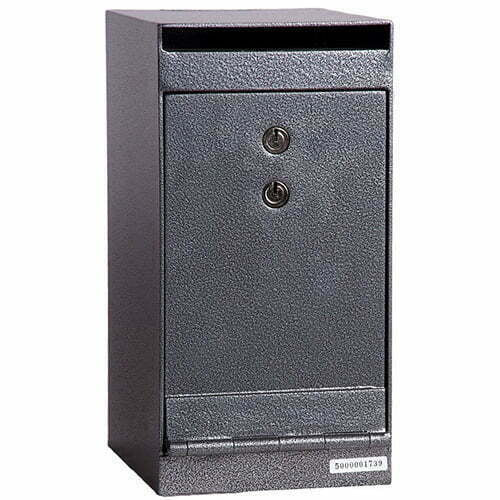
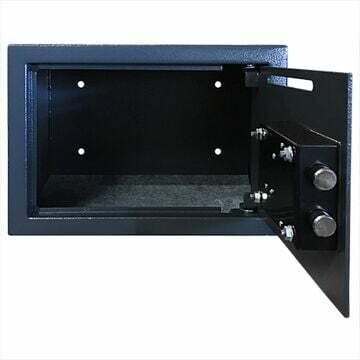
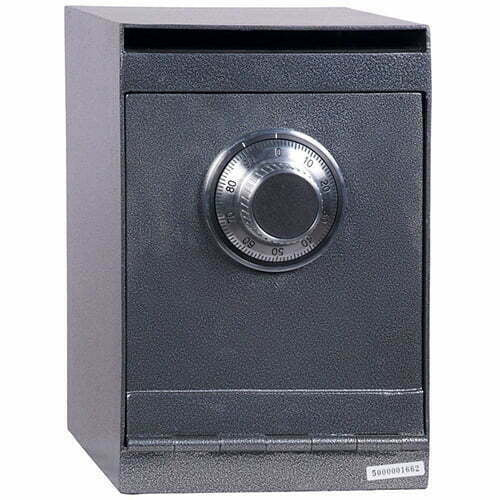
Slot safes — the Hollon KS25P, DP25EL and DP450LK and the compact HDS-01K, HDS-03K and HDS-03C — take folded bills, receipts and thin envelopes through a narrow slot. They are compact enough to sit beneath a POS terminal or bolt to a shelf, and they suit low-volume drops where nothing bulkier than an envelope goes in.
Top-loading safes such as the Hollon RH-2014C, RH-2014E and RH-2014K accept deposits through a rotary hopper in the top surface. They work well where the safe sits at or below counter height and staff drop into it from above.
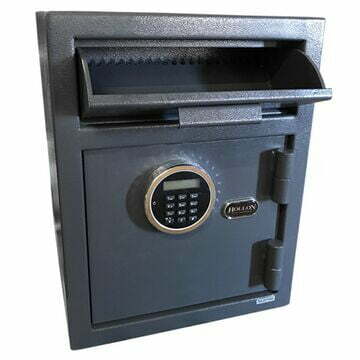
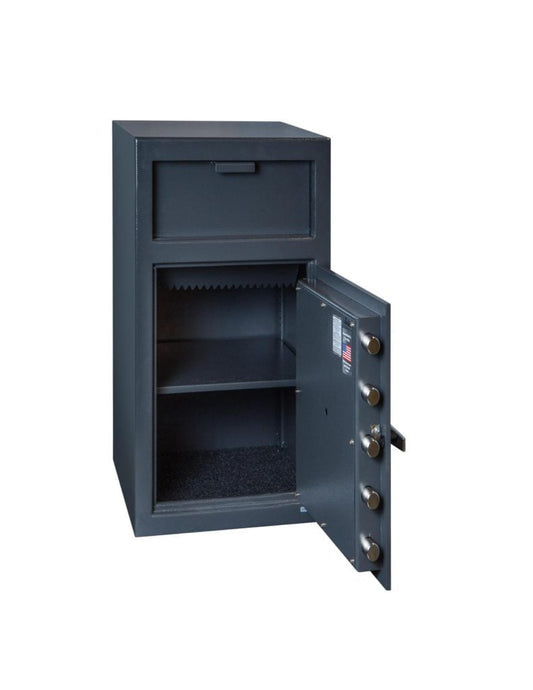
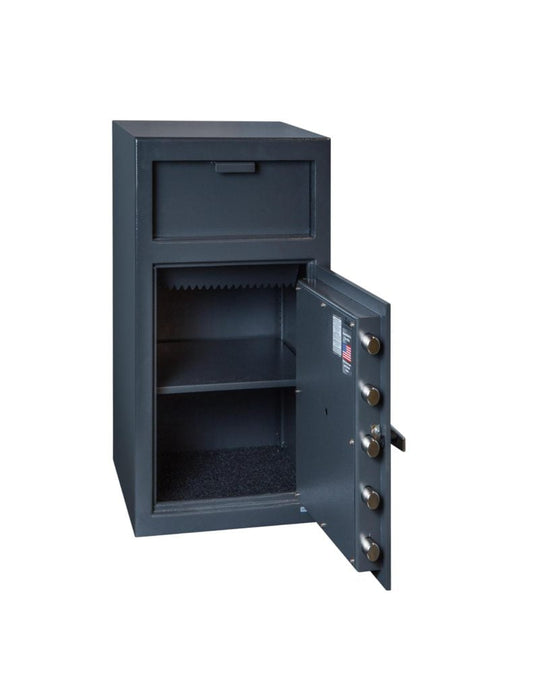
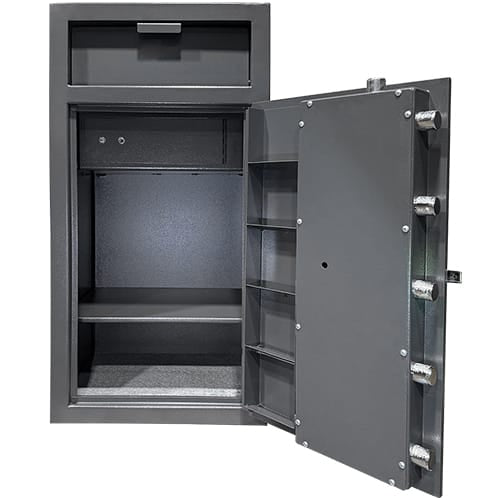
Front-loading depository safes — the Hollon FD-2014, FD-2714, FD-3020 and FD-4020 models — use a front deposit door that takes bank bags and till drops, not just envelopes. This is the format most retail and restaurant operations end up on, because a whole drawer can go in at once.
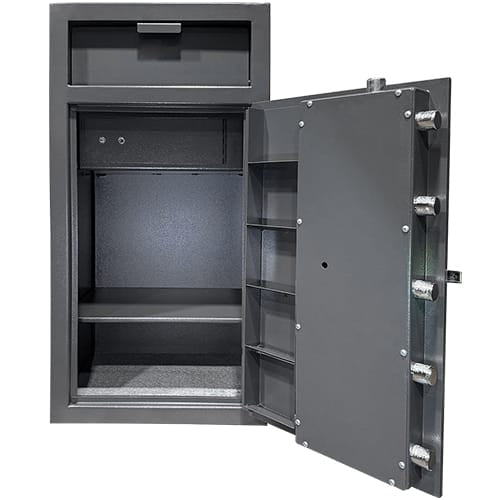
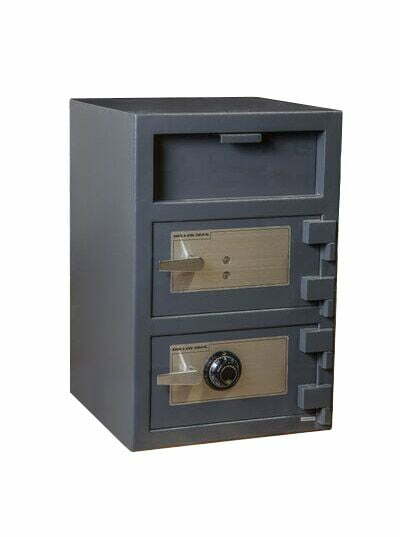
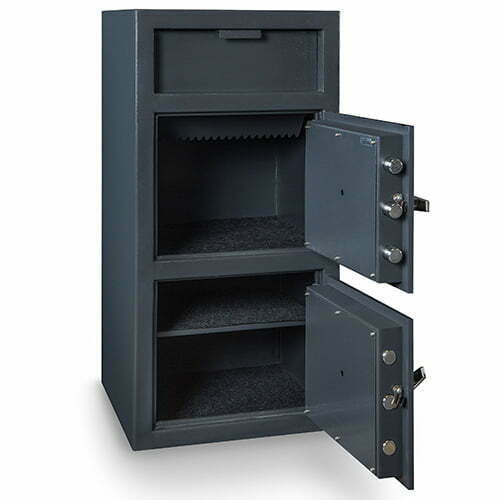
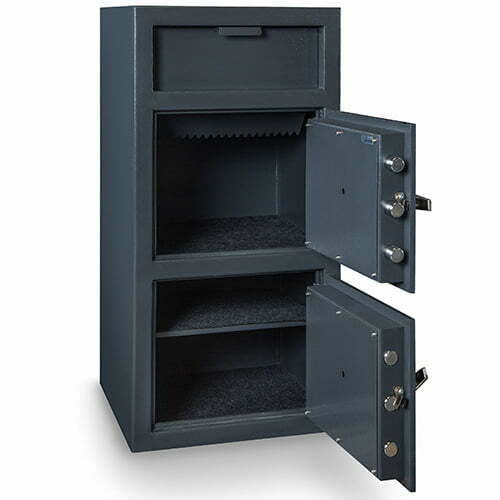
Dual-door safes like the Hollon FDD-3020 and FDD-4020 models divide the safe into two independently locked compartments: a drop vault above and a storage vault below. This lets you empty the drop side on a different schedule — and with a different keyholder — from the reserve below it, which is how many multi-shift businesses separate daily takings from a float.
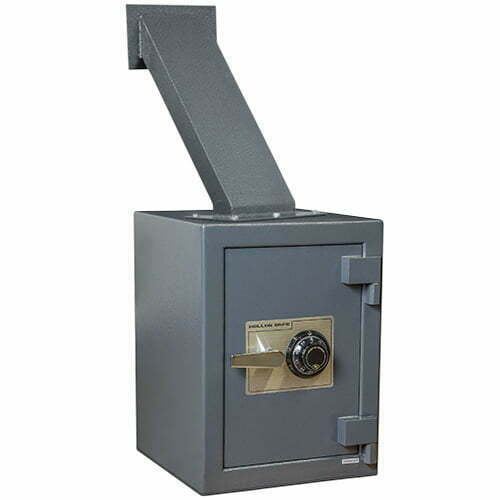
Through-the-wall safes — the Hollon TTW-2015C and TTW-2015E — are B-rated depository safes built to install through a wall, with a UL Listed S&G dial or electronic keypad.
Anti-fishing matters more than it sounds
The most common attack on a drop safe is not force — it is retrieval, using a wire, a hook or a strip of tape pushed back through the deposit opening. The Hollon FD and FDD front-loading models use an anti-fish baffle in the deposit path, and the DP450LK uses a double-row baffle, specifically to defeat that. If you are comparing against a cheaper drop box, this is the feature to check.
Money chests are a different tool
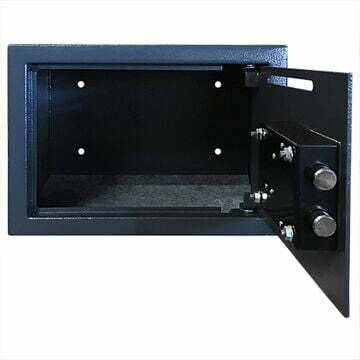
The Hollon B1414, B2015 and B3220 burglary safes are not depository safes: they have no drop opening at all. They are for secure storage of tills, bags and paperwork by someone who already has the combination, and they give you far more usable interior for the footprint because no space is given over to a drop chute. Many businesses run one of each — a drop safe at the counter, a chest in the back office.
Two things to plan for
First, none of these safes is fire rated. Most are B-rate burglary construction — a 1/2-inch solid steel door, a steel body and active locking bolts — engineered against attack, not heat. The compact KS25P, DP25EL and DP450LK drop slot safes are not B-rated. Records that need fire protection belong in a fire and burglary safe. Second, bolt it down. Every model has pre-drilled anchor holes, and an unanchored cash safe under about 200 lbs can simply be carried out and opened elsewhere.
Frequently Asked Questions
What size deposit fits through the front-loading door?
The deposit door on the Hollon FD-2014C opens 10-3/4" W x 4-1/2" H. The opening size for each model is listed on its product page.
Which cash safes require two keys to open?
The Hollon FD-2014K, FD-2714K and RH-2014K use a dual key (dual control) lock, and the HDS-01K and HDS-03K are dual control key safes. On the FDD-3020CK, the top drop compartment uses a dual key lock and the bottom compartment a dial.
Can I get an electronic keypad instead of a dial?
Yes. Many Hollon models come in a dial version (ending in C) and an electronic version (ending in E), for example the FD-2014C and FD-2014E, the RH-2014C and RH-2014E, and the TTW-2015C and TTW-2015E.
What is the inner locking compartment on the FD-3020CILK?
It is a dual key inner locking compartment inside the main chamber, which creates a second access tier for till floats, petty cash or restricted reserves.


