
The Complete Home, Garage, and Outdoor Storage Safe Guide

Quick Answer: A secure home or garage safe protects handguns, power tools, cash, and paper records from theft, house fires, and water damage. To choose the right safe, match steel thickness (measured in gauge) to your security needs, pick a certified fire rating, and select an electronic or biometric lock for fast access.
What Type of Safe Do You Really Need for Your Home or Garage?
Direct Answer: Pick a safe based on your main risk: fire protection, theft defense, or daily storage. Fireproof safes use thick insulation board to block intense heat. Burglary safes use thick steel plates, solid steel bolts, and drill-resistant hard plates to stop break-ins. Combination safes blend both features into one unit.
The Three Main Safe Categories at a Glance
• Fire Protection: Thick drywall or fireboard walls, an intumescent seal, and lower internal heat during a fire.
• Theft Prevention: 10-gauge to 12-gauge steel, heavy door bolts, and concrete floor anchors.
• Outdoor / Garage: A weather seal, a dehumidifier bar, and a bolt-down base for unconditioned spaces.
Selecting the right storage safe starts with knowing what you want to lock up. A basic tin lockbox might keep small kids away from a key, but it will not stop a crowbar or a house fire.
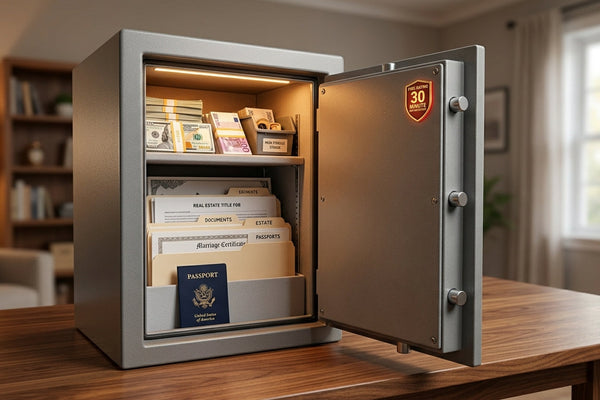
• Fireproof Safes: Designed with insulated walls made of fireboard or composite concrete. These protect cash, land deeds, and birth certificates from high heat.
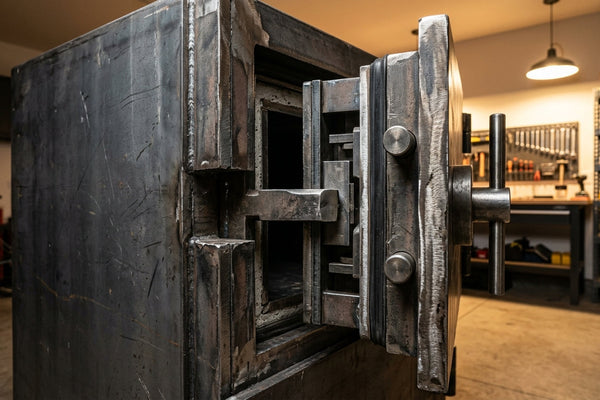
• Burglary Safes: Built with solid 10-gauge to 12-gauge American steel walls. They feature hardened steel door frames and heavy locking bolts to stop drill, pry, and hammer attacks.
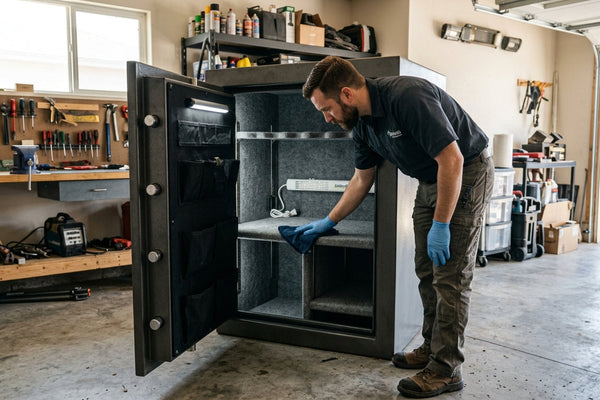
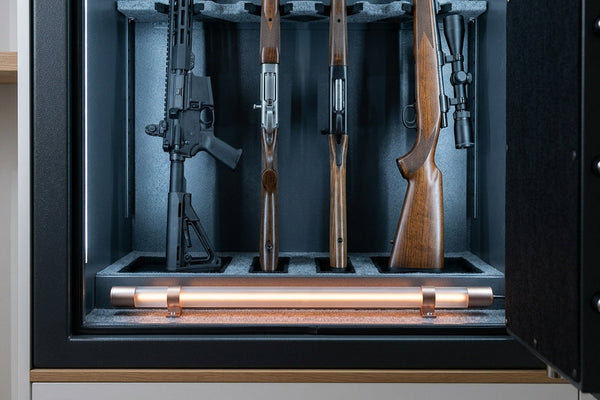
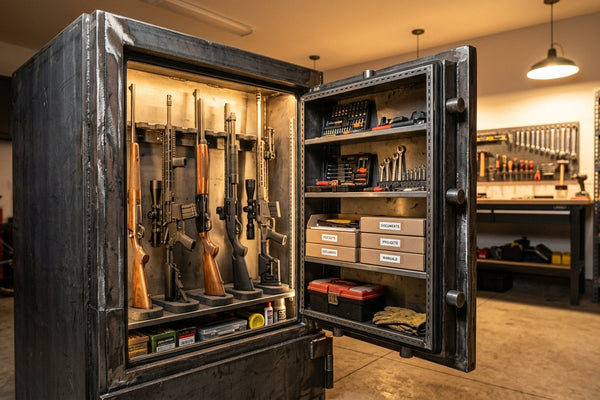
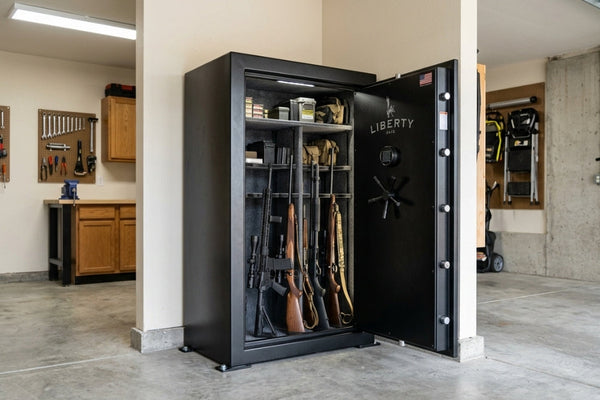
• Gun & Tool Safes: Taller units fitted with adjustable shelves, door pegboards, and power pass-through ports. Perfect for long guns, expensive power tools, batteries, and ammo.
• Jobsite & Outdoor Vaults: Heavy steel boxes built with recessed padlock housings. Ideal for outdoor sheds, truck beds, or unconditioned garages.
|
Safe Class |
Primary Defense |
Steel Gauge Range |
Fire Protection Level |
Best Use Case |
|
Heat & Water |
14-gauge to 16-gauge |
30 to 120 Minutes |
Passports, paper records, cash |
|
|
Handgun / Lockbox |
Fast Access |
12-gauge to 14-gauge |
Minimal |
Nightstand bedside defense |
|
Heavy Gun Safe |
Theft & Fire |
10-gauge to 12-gauge |
60 to 90 Minutes |
Rifles, handguns, collections |
|
Jobsite Tool Box |
Pry Attacks |
10-gauge to 12-gauge |
None (Vented/Steel) |
Power tools in garage or shed |
How Do Fire Ratings and Burglary Ratings Work?
Direct Answer: Fire ratings state how long a safe keeps its inside temperature under 350°F during an external fire. Burglary ratings like RSC (Residential Security Container) or TL-15 test how well the door, welds, relocker mechanisms, and lock body withstand prying, drilling, and hammer strikes from real tools.
Steel Gauge Thickness Explained
Remember: lower gauge numbers mean thicker, stronger steel.
• 14-Gauge (0.0747"): Light entry-level protection.
• 12-Gauge (0.1046"): Standard home defense, roughly three times stronger than 14-gauge.
• 10-Gauge (0.1345"): Heavy security defense for firearms and valuables.
• 7-Gauge (0.1793"): Maximum-security vault wall thickness.
Fire Ratings Explained Simply
Paper chars and burns at 451°F. Digital media like USB drives and hard drives can fail at 125°F.
• 30-Minute Rating: Basic entry-level protection for homes located near a local fire station.
• 60-Minute Rating: The standard minimum recommendation for home paper storage and firearms.
• 90 to 120-Minute Rating: Maximum protection for rural homes, garages, or areas far from emergency services.
During a fire, heat triggers an expandable door gasket called an intumescent seal. This seal swells up to 8 times its normal size, sealing out heat, smoke, and water from fire hoses.
Burglary Ratings Demystified
When shopping for a steel safe, remember that lower gauge numbers mean thicker steel. A 10-gauge steel wall (0.1345") is much thicker and stronger than a 14-gauge wall (0.0747").
• RSC Level 1: Tested to stop direct prying, punching, chiseling, and hammering attacks for at least 5 net minutes.
• TL-15 Rating: High-security rating showing the safe door can resist specialized commercial power tools for 15 solid minutes of direct attack.
• Hard Plate & Relockers: A plate of hardened steel placed between the outer door and the lock mechanism dulls drill bits. If a drill pierces the plate, a mechanical relocker triggers extra secondary steel pins to freeze the boltwork in place permanently.
Which Lock Type Is Best for Everyday Use?
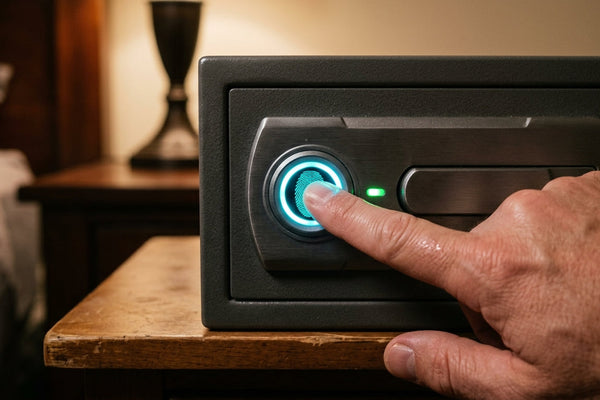
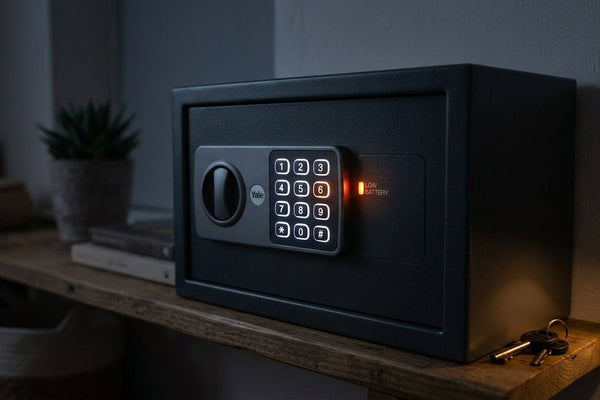
Direct Answer: Electronic keypads and biometric fingerprint scanners give you the fastest access during emergencies. Mechanical dial locks take longer to open but never require batteries or electric wiring. Dual-custody systems require both a key and a code for ultimate access control.
|
Lock Type |
Opening Speed |
Key Features |
|
Biometric |
About 1 second |
Optical fingerprint sensor, key override backup |
|
Digital Keypad |
About 3 seconds |
Backlit keys, battery powered |
|
Dial Lock |
About 15 seconds |
No battery ever, lifetime mechanical dial |
Selecting the best lock type comes down to speed versus long-term maintenance:
• Biometric Locks: Uses a quick fingerprint scan. Perfect for a quick-access bedside safe or a garage handgun lockbox. Look for models with California DOJ approval and an extra manual key bypass in case the battery dies.
• Electronic Digital Keypads: Allows you to set a custom 4-to-8 digit PIN code. Easy to type in the dark if the keypad is backlit. Standard 9V batteries power these units from the outside faceplate.
• Mechanical Combination Dial Locks: The classic three-wheel dial lock. They are slower to open but offer bulletproof durability with zero electronic parts to service.
Where Should You Put a Safe in Your House or Garage?
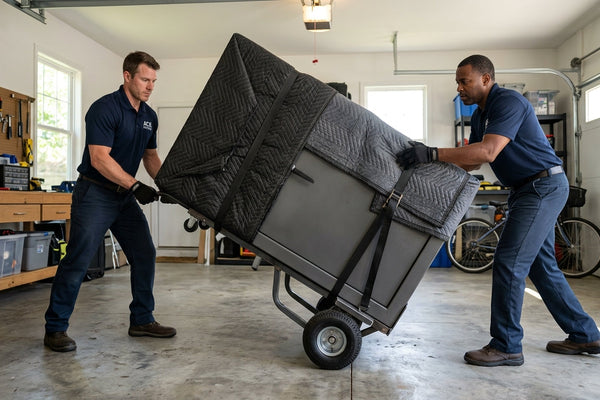
Direct Answer: Place heavy safes in a corner against a concrete foundation wall. This positioning makes it almost impossible for thieves to get leverage with a pry bar. Always anchor the steel floor of the safe into the concrete slab using heavy-duty expansion wedge bolts.
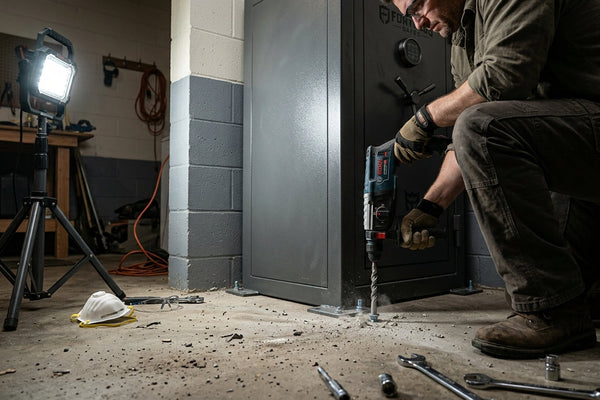
Installing a safe on a garage floor or workshop slab is the safest option for heavy loads. Follow these steps to secure your safe correctly:
1. Position in a Corner: Push the safe tight against a corner wall. This eliminates leverage points, hides the side panels, and stops thieves from using long crowbars to tip the unit over.
2. Place a Moisture Barrier: Concrete holds ground moisture. Put a rubber mat, plastic barrier, or treated wood base under the metal bottom to keep moisture from rusting the steel frame.
3. Drill into the Concrete Floor: Using a hammer drill and masonry bit, drill directly through the pre-drilled floor holes in the bottom of your safe into the concrete floor below.
4. Drive Concrete Anchor Bolts: Drop heavy steel wedge anchors into the drilled holes. Torque the top nuts down to lock the safe body directly to the foundation slab.
How Do You Stop Moisture and Rust Inside a Safe?
Direct Answer: Prevent rust inside a sealed safe by installing a heating rod dehumidifier bar or adding silica gel packs. Heating rods raise the internal temperature slightly above ambient room air, stopping moisture from condensing on cold metal guns and tools.
When you lock an airtight safe in an unconditioned area like a garage, shed, or basement, trapped humidity creates rust.
• Dehumidifier Bars: Small electric heating rods mounted along the bottom floor of the safe. They warm the inside air slightly, preventing condensation from settling on tools, gun barrels, or steel hardware.
• Desiccant Silica Gel Packs: Non-electric boxes that absorb moisture out of the air. These are ideal for small lockboxes without internal power outlets. They can be dried out in a home oven and reused.
• Hygrometers: Small digital meters attached to the inside door that show real-time humidity levels. Keep your safe interior below 50% relative humidity to protect metal surfaces.
Why US Manufacturing Matters for Security Storage
Direct Answer: Domestically manufactured safes use real high-tensile US steel that resists prying and drilling much better than thin imported sheet metal. US production guarantees exact steel thickness, reliable structural welds, domestic freight shipping, zero ocean transit delays, and valid lifetime warranties.
Solid Domestic Steel vs. Thin Imported Metals
Many imported safes advertised online use cheap 14-gauge or 16-gauge sheet metal filled with light drywall composite. These thin walls can be cut open easily with a common circular saw or hand axe.
American-made safes are built with thick, solid 10-gauge or 12-gauge steel frames. They feature full-length continuous seam welds rather than spot welds, making the entire box rigid and pry-resistant.
Fast Transit & Domestic Warranty Coverage
Buying a domestically built garage safe protects you from long overseas shipping delays and damaged arrivals:
• No Port Delays: Ships directly from regional distribution hubs via domestic freight carriers with lift-gate delivery.
• Full Part Availability: Replacement keypads, lock solenoids, and door handles ship out in days, not months.
• Lifetime Fire & Theft Support: Built with lifetime repair or replacement warranties if your safe survives a house fire or break-in attack.
Explore the Knowledge Center

More guides from the Knowledge Center
Ready to lock down what matters most?
Jump straight to the safe category you need - fire, burglary, gun, depository, wall or TL-30 rated.


